Your first duel starts here

How to play
Pawn&Peak

Cross the board. Read the terrain.
Make every piece count.

Pawn&Peak is a turn-based strategy game for two players. Your goal: move your pieces off the far side of the board or neutralise the opposing team. Learn the current beta rules below, then try a few tips for your first match.

See how to win
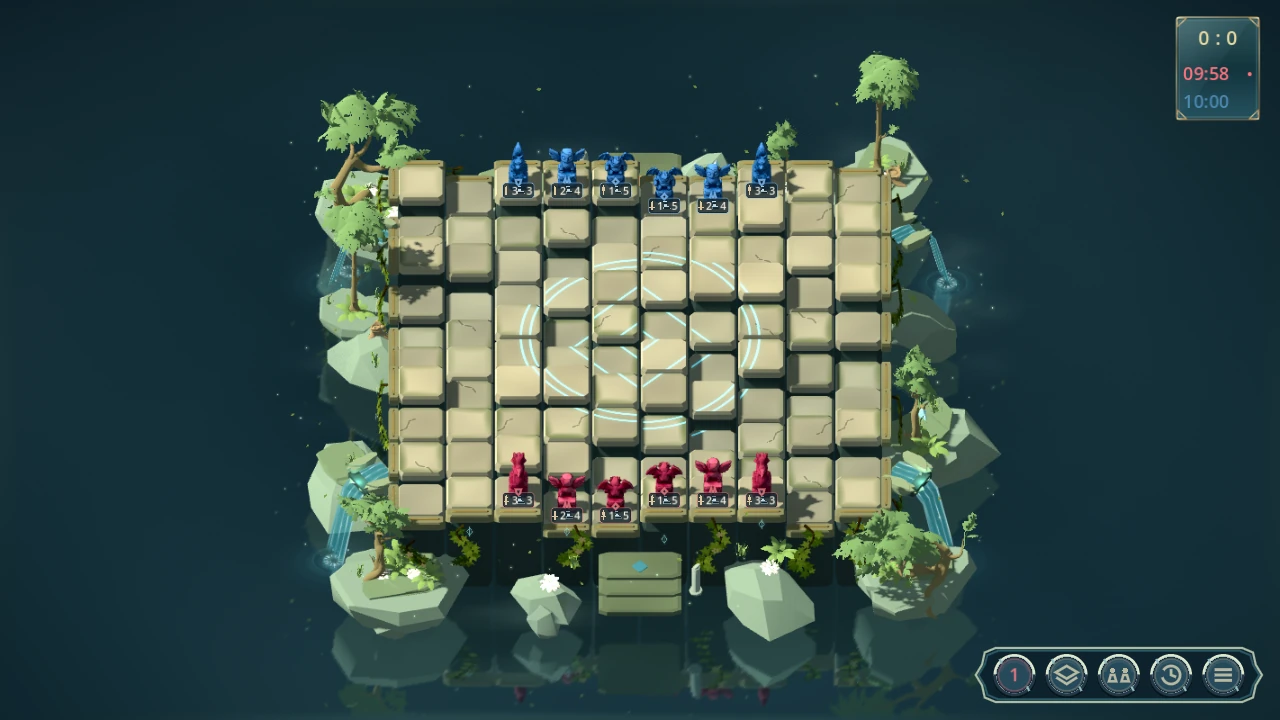
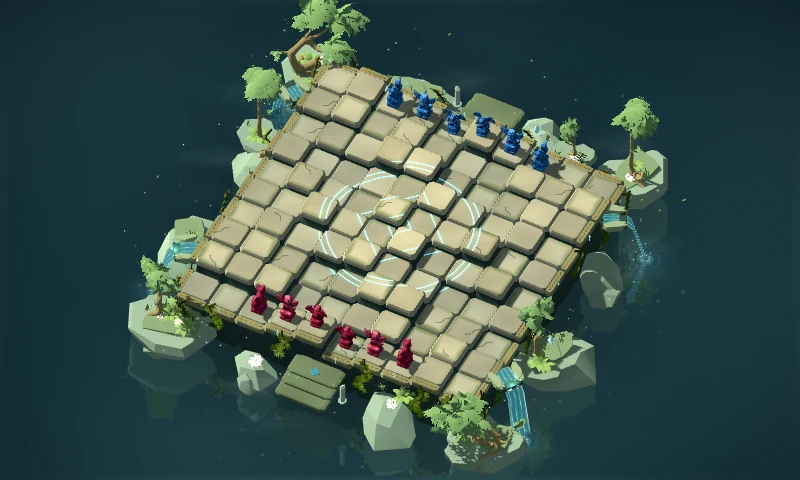
Pawn&Peak’s raised terrain board, with six red pieces facing six blue pieces.
Two teams. Three roles. One terrain to read.

01 · Read the board

Six pieces on each side.

A standard match takes place on a 10 × 10 board. Each team starts with two Scouts, two Protectors and two Guardians.

In the starting view, Red moves from the bottom towards the top exit; Blue goes the other way. Red plays first. Players then take turns moving one piece at a time.

Select a piece to see its available destinations, then choose a tile. The badges show its base strength and movement points.

A match at the start: Red at the bottom, Blue at the top, badges on the pieces and clocks on the right.
In-game screenshot · Starting position

02 · Know your team

Three complementary roles.

A piece scores its base strength when it exits. Its appearance and colours do not change its abilities.

Imp, the Scout figurine

The Scout

Strength 1 · Movement 5 · Exit 1 point

Your most mobile piece. Its special ability replaces a normal move: it moves to a diagonally adjacent tile or two tiles in a straight line, ignoring elevation costs.

This takes the whole turn. The destination must be empty; the special move cannot capture or exit the board. For a straight move, the intermediate tile must also be empty.

Pixie, the Protector figurine

The Protector

Strength 2 · Movement 4 · Exit 2 points

Its special ability gives it +1 attack when the movement cost to reach its target is exactly four points.

Elevation counts towards that cost. You do not have to cross four tiles to benefit from this charge.
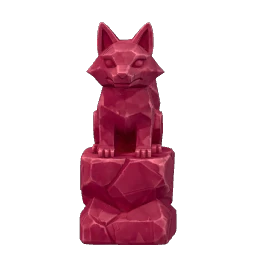
Fox, the Guardian figurine

The Guardian

Strength 3 · Movement 3 · Exit 3 points

Your strongest but least mobile piece. If it is the very first piece to exit in the entire match, its team wins immediately.

If another piece has already exited, the Guardian scores three points and the match is decided on score.

03 · Choose your path

Height has a cost.

A normal move goes from tile to tile, horizontally or vertically. The path can turn, but cannot pass through any piece. It must fit within your piece’s movement budget.

Each step costs 1 + the absolute height difference. Climbing and descending therefore cost the same. The cheapest available path determines the movement cost.

To exit, reach the opposite edge and keep one extra point to cross the line. Reaching the last row alone is not enough.

The cost of one step

Same height
1 point
One level up or down
2 points
Two levels up or down
3 points

Example: one flat step followed by a climb of one level costs 1 + 2 = 3 points. A Guardian uses its entire movement budget to cross just those two tiles.

04 · Set up a capture

Attack, height and support.

To capture, move onto an opponent’s tile. The final step counts towards the movement cost. A capture is only allowed if your attack meets or exceeds their defence: the attacker wins ties.

Your attack

  • Your piece’s base strength.
  • +1 if its starting tile is higher than the target; −1 if it is lower; zero at the same height.
  • The strength of each ally adjacent to the target, excluding the attacker.
  • +1 for the Protector’s charge when it applies.

The opponent’s defence

  • The target piece’s base strength.
  • +1 for each of the defender’s allies adjacent to that piece.

Support and reinforcements only count horizontally or vertically adjacent tiles, not diagonals.

05 · Finish the duel

More than one way to win.

  1. Exit with a Guardian first

    If your Guardian is the very first piece to exit in the entire match, you win immediately.

  2. Win on score

    As soon as two pieces in total have exited, across both teams, the match ends. The higher score wins; equal scores mean a draw. Captures do not award points.

  3. Neutralise the opposing team

    If your opponent has no pieces left on the board after your action, and an exit has not already ended the match, you win. You also win if they have no legal move on their turn. Remaining pieces are not added to the score.

Other endings: move limit, clock and resignation

The limit is 200 moves across both teams. If at least one point has been scored, scores decide the result. Otherwise, each team’s most advanced piece towards its exit is compared; if progress is equal, base strength breaks the tie. A remaining tie means a draw.

In a timed match, watch your clock: running out of time gives your opponent the win. Resigning also gives them the win.

06 · Turn rules into tactics

Before you make your move…

Try the rules on the board.

Start with the tutorials in the Puzzle menu, then try Training against the computer. The beta is available on Windows; a signed-in account is required to access the game.

Request beta access

Beta guide · Rules checked against the game engine on 6 November 2026. Challenges can start with a specific score, set of pieces and move limit.